
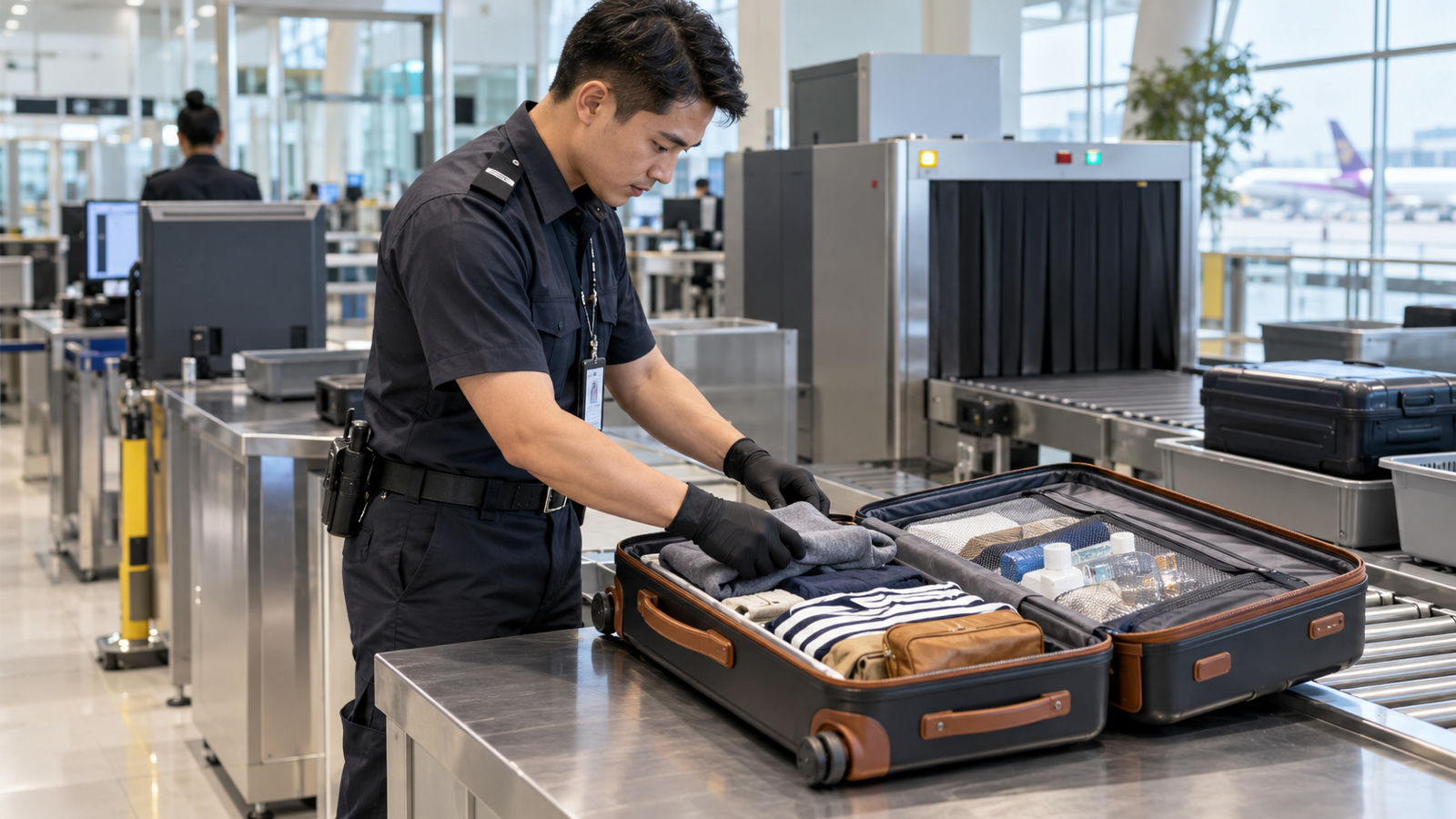
Thailand’s new checked-baggage inspection rules take effect on 16 October 2026. From that date, airport security staff may open a checked suitcase without the passenger present if X-ray screening gives them reasonable grounds to suspect a prohibited item or potentially dangerous goods.
This is a targeted aviation-security measure, not a policy of randomly opening ordinary travellers’ luggage. For most passengers, the practical advice is simple: pack carefully, keep batteries in your hand luggage and use a TSA-approved lock if you check a suitcase.
When can Thai airport security open a checked bag?
The Civil Aviation Authority of Thailand (CAAT) says a checked bag may be opened when screening identifies suspicious items, prohibited articles or potentially dangerous goods. The passenger does not have to be present for the inspection.
CAAT says the process must be carried out in a designated area, recorded on video and documented so that it can be reviewed afterwards. A Notice of Baggage Inspection should be placed inside the suitcase to tell the owner that it was opened.
Examples of prohibited items include explosives, firearms, ammunition and other objects that could threaten the aircraft or people on board. The rule does not mean that security staff can search every bag without a reason.
What should travellers remove before checking a bag?
Power banks and spare lithium batteries must not be packed in checked baggage. They should be carried in the cabin, subject to the airline’s capacity and packaging rules. A power bank left in a suitcase is exactly the sort of item that can create a screening problem.
Vapes and e-cigarettes should not be brought to Thailand. They are illegal under Thai law, regardless of whether they are placed in hand luggage or a checked suitcase.
Should you use a TSA-approved lock?
CAAT and Airports of Thailand recommend an internationally recognised TSA-approved lock. If an inspection is necessary, security staff can use the appropriate master key to open and re-lock it without damaging the lock or suitcase.
A non-TSA lock may have to be cut, forced or bypassed. The official airport guidance says passengers must accept the risk of resulting damage and cannot claim compensation for it. A TSA lock is therefore a sensible precaution, but it is not a requirement for travelling to Thailand.
What happens if your suitcase is inspected?
- The bag is diverted to a designated inspection area after screening.
- Security staff open and inspect it while the process is recorded.
- Prohibited or dangerous items may be seized under the applicable rules.
- The suitcase is closed again and a written inspection notice is placed inside.
Travellers should avoid putting valuables, fragile items, essential medication or important documents in checked baggage. Keep those items with you whenever the airline allows it.
What this means for people flying from Thailand
The new rule starts on Friday 16 October 2026. It is intended to let airport security resolve a suspicious bag without waiting for the owner to be located, helping reduce avoidable departure delays.
It does not change Thailand’s visa or entry rules. If you are also checking the latest entry requirements, see our Thailand Visa News and Immigration Updates. For another recent airport-related update, read our report on baggage recovery at Suvarnabhumi.
Before you fly: put power banks and spare batteries in your carry-on, leave vapes at home, remove prohibited items and use a TSA-approved lock on any checked suitcase.
Official sources
- Civil Aviation Authority of Thailand: checked baggage may be opened for inspection
- Airports of Thailand: Guidelines for Checked Baggage Inspection
- Background report: Baht & Beyond
Ask Next Step Hua Hin
Type your question below to search our website and receive an immediate answer.