
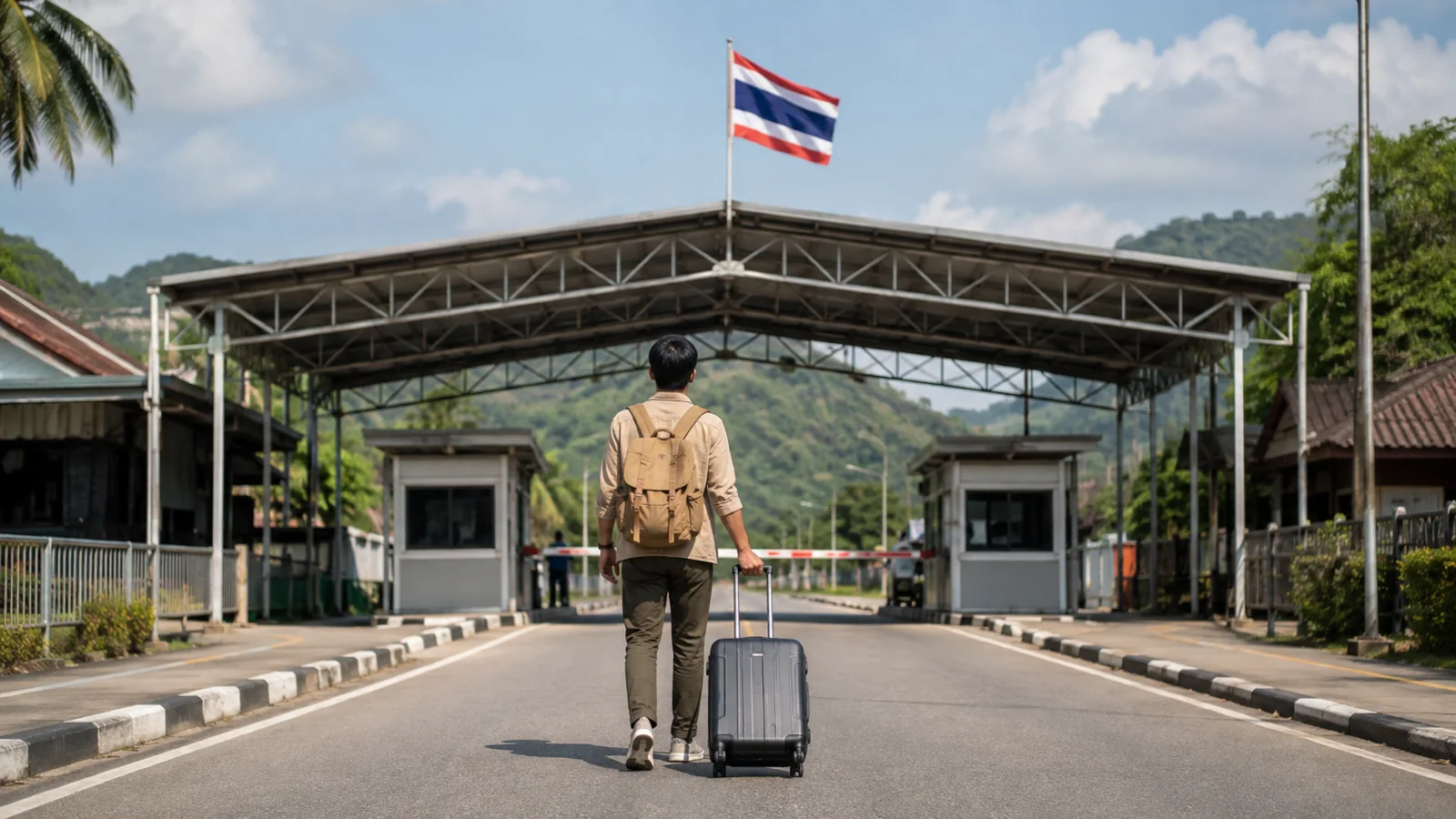
Travellers planning a border run should check their entry history before leaving Thailand. From 15 September 2026, most people using the new 30-day tourist visa exemption at a land-border checkpoint will be limited to two such entries per calendar year, according to the Tourism Authority of Thailand (TAT).
The restriction is part of the revised entry framework published in the Royal Gazette on 31 August. It concerns use of the exemption at land borders, rather than every visit to Thailand regardless of visa or arrival method.
Who is covered—and who is exempt?
The 30-day scheme covers 60 countries and territories, including Sweden, Germany and the United Kingdom. TAT names four nationalities outside the land-entry cap: Malaysia, Brunei Darussalam, Indonesia and Singapore. Further exceptions may be designated by the Minister of Interior.
The new 15-day exemption for Seychelles and Mauritius also has a general two-entry annual land-border limit. Separate bilateral arrangements continue where applicable, so nationality and the precise entry scheme matter.
See our September 2026 visa-exemption update for the broader changes.
What does “per calendar year” mean?
A calendar year runs from 1 January to 31 December. Changing land checkpoints does not create a separate allowance. This is not a rolling twelve-month period, and it does not mean two entries at each crossing.
The published summaries reviewed do not explain how earlier 2026 crossings will be counted during the transition. If you have already entered by land this year, confirm your position with Thai Immigration before arranging another trip. Do not assume everyone receives two fresh entries on 15 September.
Does the limit apply to flights?
This specific land-border cap does not apply to airport arrivals. That does not guarantee admission: travellers must still meet the relevant entry requirements. Switching to flights should not be treated as a reliable way to sustain repeated tourist stays.
Plan a lawful stay beyond your next border run
The entry count and the length of each permitted stay are different issues. Two land entries do not establish a universal annual limit of 60 days in Thailand; visas and any approved extensions have their own conditions.
Before booking, compare a tourist visa with visa-exempt entry and check whether an in-country extension is available for your circumstances. Our border run, visa run and re-entry permit guide explains why those routes are not interchangeable.
For a longer stay, use a visa suited to your actual purpose. Next Step Hua Hin can review your travel history and plans. Explore our visa guides and services or contact us before travelling.
Move from repeated entries to a suitable long-stay route
If repeated border entries are becoming part of your routine, compare a visa that matches your real purpose. Our DTV service, retirement visa service and marriage visa service cover common long-stay routes. People building a permanent future in Thailand should separately review permanent residence and citizenship.
Sources and fact-check
- TAT: official visa-exemption update, 1 September 2026
- Newland Chase: entry-rule advisory, 2 September 2026
- The Thaiger: original report, 6 September 2026
Checked on 7 September 2026. General information; confirm the rules for your nationality and circumstances before travelling.
Choose Next Step Hua Hin as a preferred source
Increase the chance of seeing our Visa News in Google Top Stories.
Ask Next Step Hua Hin
Type your question below to search our website and receive an immediate answer.