
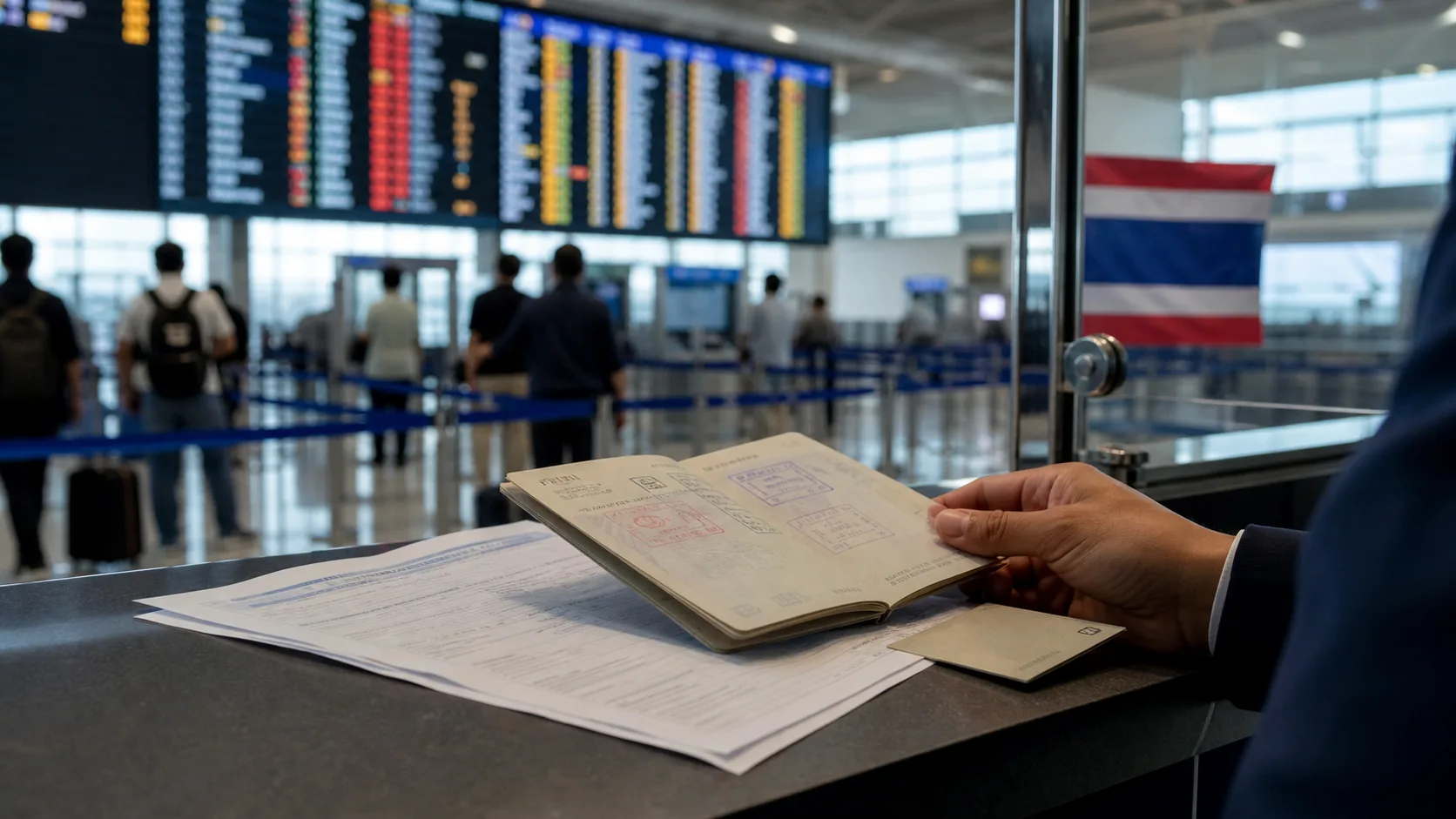
Thailand’s new deportation regulation took effect on 28 August 2026, but it does not create a new restriction for ordinary, law-abiding tourists or foreign residents. It establishes a clearer government process for cases involving unlawful entry or stay, illegal work or business activity, forged official documents, serious offences and conduct affecting public order.
What this means at a glance
- There is no new deportation rule aimed at normal tourists.
- The regulation standardises how government agencies refer and process qualifying cases.
- A deportation order may include a period during which the person cannot return to Thailand.
- The regulation was published in the Royal Gazette on 27 August and took effect on 28 August 2026.
The Prime Minister’s Office Regulation on Deportation B.E. 2569 (2026) was signed by Prime Minister Anutin Charnvirakul. It concerns the administrative handling of deportation cases; it does not itself reduce visa validity, change visa-exemption periods or alter routine extension rules. Travellers looking for the separate entry-rule update should read our report on Thailand’s confirmed 30-day visa exemption from 15 September 2026.
Who should be concerned?
The final regulation covers foreign nationals connected with specified unlawful conduct. The practical distinction is between ordinary lawful activity and circumstances that may be referred for deportation consideration.
| Situation | What the regulation means |
|---|---|
| Lawful tourism or residence | No new restriction. Visitors and residents who maintain valid status and follow Thai law are not the target of the regulation. |
| Unlawful entry or stay | The case may be referred for immigration enforcement and deportation consideration. See our Thailand overstay guide. |
| Illegal work | Working in breach of the law governing foreign workers is a qualifying category. Review the separate Thailand work-permit requirements. |
| Illegal business activity | Operating a business unlawfully under foreign-business legislation may lead to referral. |
| Forged official documents | Forging or using fraudulent government documents is expressly covered. |
| Serious criminal offence | An offence carrying a possible prison sentence of at least five years is included. |
| Conduct affecting public order | Conduct considered contrary to public order, good morals or public wellbeing may be considered. Read the related tourist-visa revocation warning. |
People who organise, instigate, assist or support qualifying conduct may also be considered. Earlier reports about the draft referred to a three-year criminal-penalty threshold, but the final government publication uses a five-year threshold. Readers should rely on the final regulation and current official guidance.
Are ordinary tourists affected?
For ordinary visitors following Thai law, the practical position is unchanged. A holiday, lawful long stay or legitimate business visit does not become a deportation case merely because this administrative regulation exists.
However, a visa or permission to stay does not protect a foreign national from enforcement if the person enters or remains unlawfully, works without the required authorisation, uses forged documents or commits qualifying misconduct. Immigration status and criminal or administrative enforcement are related but separate matters.
Can a deportation order include a re-entry ban?
Yes. The Interior Minister has authority to issue a deportation order, and the order may specify a period during which the person is prohibited from returning to Thailand. The regulation does not state that every qualifying allegation automatically results in deportation. The case must proceed through the prescribed referral and ministerial decision process.
How the process works
The Interior Ministry’s permanent secretary, or an authorised official, reviews and reports qualifying cases to the Interior Minister. Decisions must take account of Thai law, Cabinet resolutions and Thailand’s relevant international obligations.
When a foreign prisoner is approaching release, the Corrections Department must provide the person’s identity, nationality, case information and supporting evidence to the Interior Ministry at least 15 days before release. For suspended sentences or fines, the Office of the Judiciary must provide relevant information without delay.
Where can a person be sent?
Unless the Prime Minister revokes the order or directs otherwise, the person is normally removed to the country of nationality. If nationality cannot be confirmed, the regulation provides for removal to the country where the person reported last living before entering Thailand.
A third country or international organisation may request a transfer through diplomatic channels within seven days of the deportation order. This can be relevant where removal to the usual destination could create a risk of torture, cruel or inhuman treatment, or enforced disappearance. The person must consent in writing, and the requesting party must accept the associated care and transfer costs.
The normal period for completing an approved third-country transfer is 30 days. The Interior Minister may grant up to two extensions, each of no more than 30 days.
What should you do if your status is irregular?
Do not ignore an overstay, questionable entry stamp, cancelled permission to stay or work-authorisation problem. The correct response depends on the facts, and delaying can narrow the available options. Keep copies of your passport, entry stamp, visa, extension documents and any official notice you have received.
Concerned about your immigration status?
Contact Next Step Hua Hin before visiting immigration. We can assist with many routine immigration services, extensions and document-preparation matters and help identify when specialist Thai legal advice is required.
Deportation and criminal proceedings require advice from a qualified Thai lawyer. This article provides general information only and cannot assess an individual case.
Official sources
- Download the Prime Minister’s Office Regulation on Deportation B.E. 2569 from the official government website (Royal Gazette PDF, Thai)
- Thai Government Public Relations Department: implementation and agency coordination, 29 August 2026
- Thai Government Public Relations Department: regulation summary and official attachment, 28 August 2026 (Thai)
Information checked against official Thai government publications on 1 September 2026.
Ask Next Step Hua Hin
Type your question below to search our website and receive an immediate answer.