
Thailand’s Long-Term Resident (LTR) visa has passed 12,000 approvals since the programme began in September 2022, according to figures from the Board of Investment (BOI).
The BOI says 12,010 foreign nationals have been approved in the first four years. It estimates that LTR holders have generated about 43 billion baht in economic value through visa fees, spending in Thailand, investment and tax contributions from highly skilled professionals. That is an estimate of wider economic activity, not simply the amount collected in visa fees.
Who is using Thailand’s LTR visa?
Wealthy pensioners are the largest group in the published breakdown, with 4,561 approvals. Dependants account for 3,891, followed by 1,779 highly skilled professionals, 1,043 Work-from-Thailand professionals and 737 wealthy global citizens.
Applicants from the United States form the largest nationality group, with more than 2,400 approvals. Japan follows with more than 1,300, while the United Kingdom accounts for over 1,000. Japanese nationals have been particularly visible among highly skilled professionals.
What the LTR programme offers
The LTR is designed for defined groups of affluent residents, qualifying pensioners, remote professionals and highly skilled workers. It is not a general long-stay visa for anyone who wants to remain in Thailand.
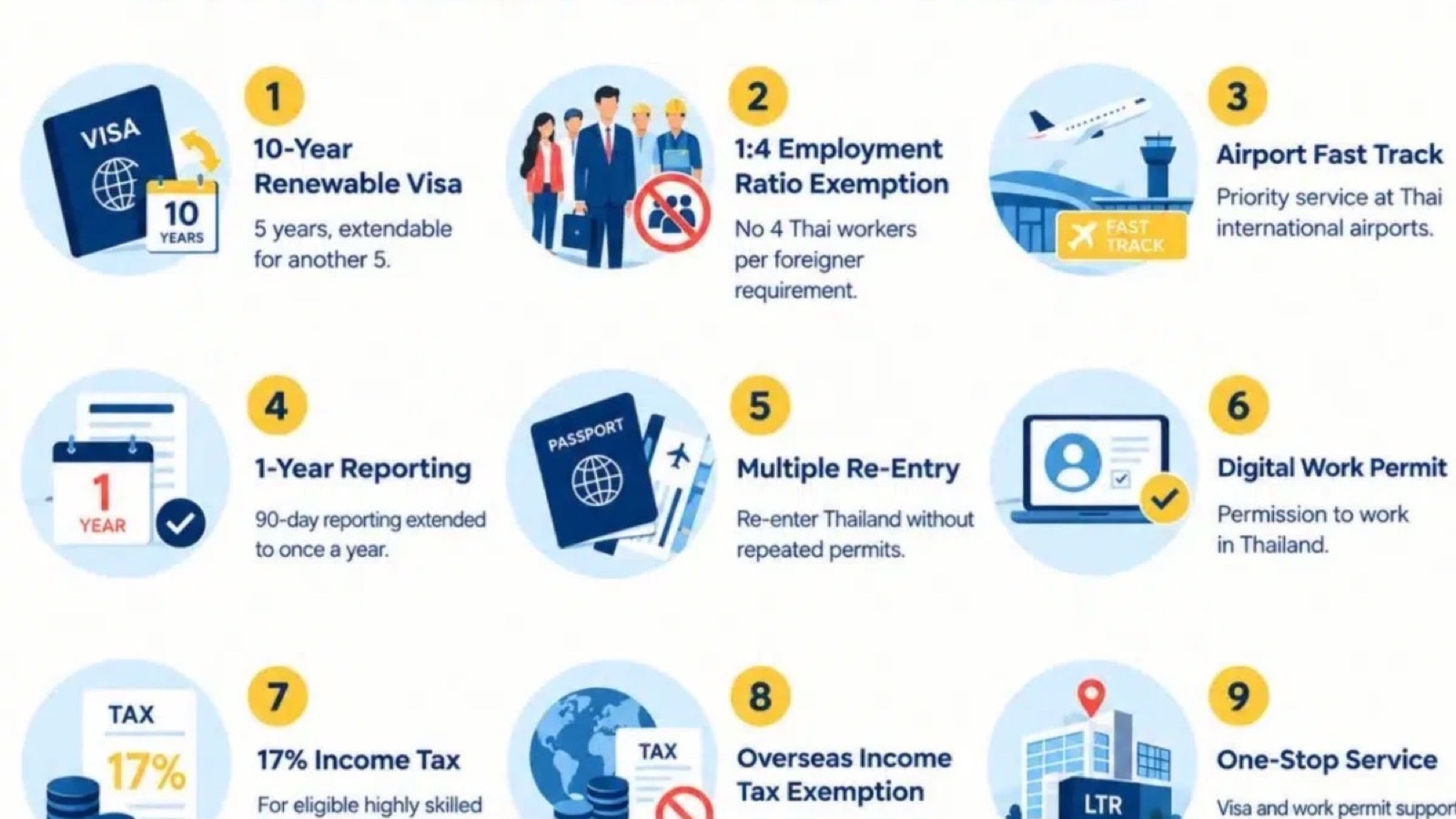
Successful applicants can receive permission to stay for up to 10 years, normally structured as two five-year periods. LTR holders report to Immigration annually rather than every 90 days. People who qualify to work may also apply for a digital work permit, while some highly skilled professionals may benefit from a 17% personal income-tax rate on eligible Thai employment income. These benefits depend on the category and current official conditions.
Thailand adjusted several LTR requirements in 2025, including rules affecting wealthy applicants and professionals working remotely for overseas employers. The professional categories are also intended to support sectors such as semiconductors, advanced electronics, artificial intelligence, robotics, aviation and biotechnology.
New online system connects four agencies
The BOI launched an integrated online LTR process in September 2026. The system connects procedures involving the Department of Consular Affairs, the Immigration Bureau, the Department of Employment and the Revenue Department. It is intended to reduce duplicate administration as demand increases, but applicants must still meet the requirements for their selected category and provide supporting evidence.
If you are considering the programme, start with the official BOI LTR information and then compare your circumstances with Next Step’s Thailand LTR Visa assistance and our detailed LTR visa guide. If you are retired but do not meet the LTR criteria, our Thailand retirement visa guide may help you compare the available routes.
Requirements, financial thresholds and administrative procedures can change. A headline approval figure does not mean that every applicant will qualify. Next Step Hua Hin can review your circumstances and documents before you decide which route to pursue.
Source: Thailand Board of Investment LTR programme information, checked 6 October 2026.
Ask Next Step Hua Hin
Type your question below to search our website and receive an immediate answer.