
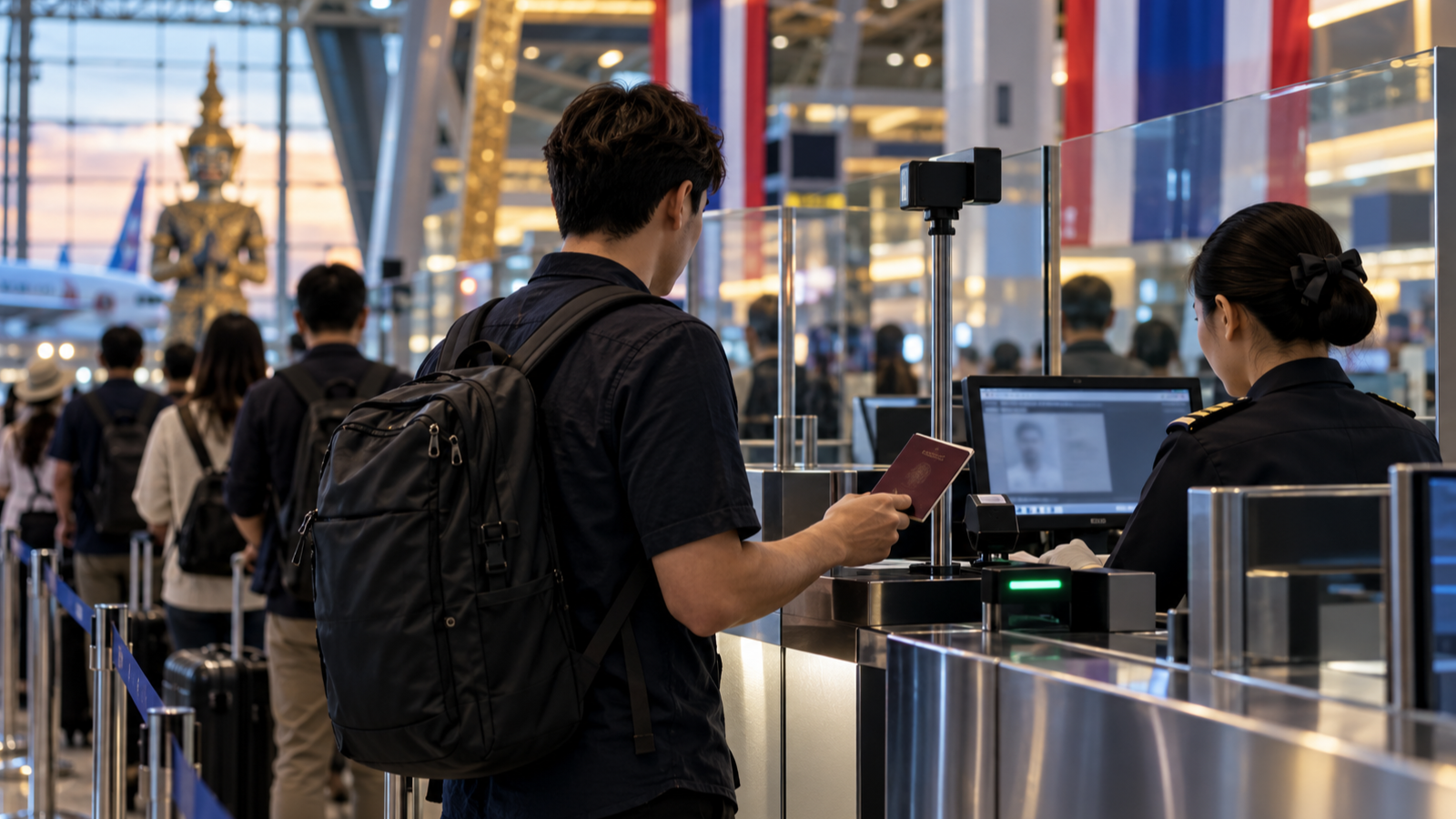
Thailand’s Immigration Bureau is continuing to focus on immigration abuse, overstays and criminal networks — but we have not found a public official announcement dated 12 October 2026 that creates a new “2027 crackdown” or a new blanket visa limit.
That distinction matters. Social-media summaries can turn an enforcement priority into a supposed new visa rule within hours. The primary Immigration Bureau material currently available supports a tougher operating approach, not a new general cap on entries or stays.
What the official record actually says
The Immigration Bureau material published by Sakon Nakhon Immigration describes a policy response to foreigners suspected of using repeated visa-exempt entries as a substitute for the correct visa, or of becoming involved in cybercrime and other unlawful activity.
The four measures described are:
- closer screening of repeated visa-run patterns that do not resemble normal tourism;
- stricter checks on foreigners recorded on watchlists connected with scam activity around border areas;
- closer consideration of temporary-extension applications where the underlying travel pattern suggests repeated visa runs; and
- a nationwide enforcement focus on foreigners who overstay.
The same official report says Immigration had refused entry at airports to about 2,900 people in this type of case from the beginning of 2025. That figure is presented as an enforcement result, not as a new legal limit that automatically applies to every traveller.
Does this mean Thailand has introduced a new visa limit?
No new blanket limit is established by the source we could verify. The report says that a person who repeatedly uses visa-exempt entries in a way that appears inconsistent with tourism may be refused entry, especially when there is no convincing explanation. That is an individual border decision based on the traveller’s circumstances and immigration history.
It should not be rewritten as “everyone gets only two entries” or as a universal reduction in permitted stay. Visa-exemption rules, visa validity, permission to stay and the Immigration officer’s decision at the border are related but different questions. A visa or visa exemption allows a person to seek entry; it does not remove the officer’s authority to assess the circumstances of that entry.
Who should take extra care?
Travellers are more likely to face questions when their passport shows frequent in-and-out trips, long periods in Thailand without a clear tourist pattern, previous overstay, work or business activity that does not match the status used, or a history connected with a watchlist. That does not mean a legitimate traveller will be refused. It does mean that the purpose of travel and the documents should be consistent.
- Use the visa or entry route that matches your real purpose.
- Keep evidence of accommodation, onward travel, funds and the reason for a longer stay where relevant.
- Do not work, run a business or perform activities that your immigration status does not authorise.
- Check your permitted-stay date and leave or extend lawfully before it expires.
- If you need to remain in Thailand, consider a proper visa and relocation route instead of repeating border trips.
What this means for Hua Hin residents
The policy is national, so it can affect people who live in Hua Hin even when they enter through Bangkok or a land border elsewhere. A planned extension, re-entry permit or change of status is usually easier to manage when the records, documents and stated purpose all tell the same story. Next Step’s Thailand Visa News archive tracks later developments, while our guide to visa runs and extensions explains the practical difference between the two approaches.
Bottom line
Thailand is clearly maintaining a stronger enforcement posture against visa misuse, overstays and criminal networks. But as of 15 October 2026, the primary source checked for this report does not establish a new FY2027 visa cap or a general two-entry rule. Travellers should follow the status and conditions that actually apply to them, and obtain individual advice before changing a visa or travel plan.
Primary source: Sakon Nakhon Immigration — report describing the four enforcement measures.
Reviewed 15 October 2026. Immigration practice can change at short notice; border officers and current official notices remain decisive.
Need help with a Thailand visa or extension?
Next Step Hua Hin can help you review the correct visa route, extension documents and re-entry planning. Visit our Thailand visa guides or contact the Hua Hin team.
Ask Next Step Hua Hin
Type your question below to search our website and receive an immediate answer.