
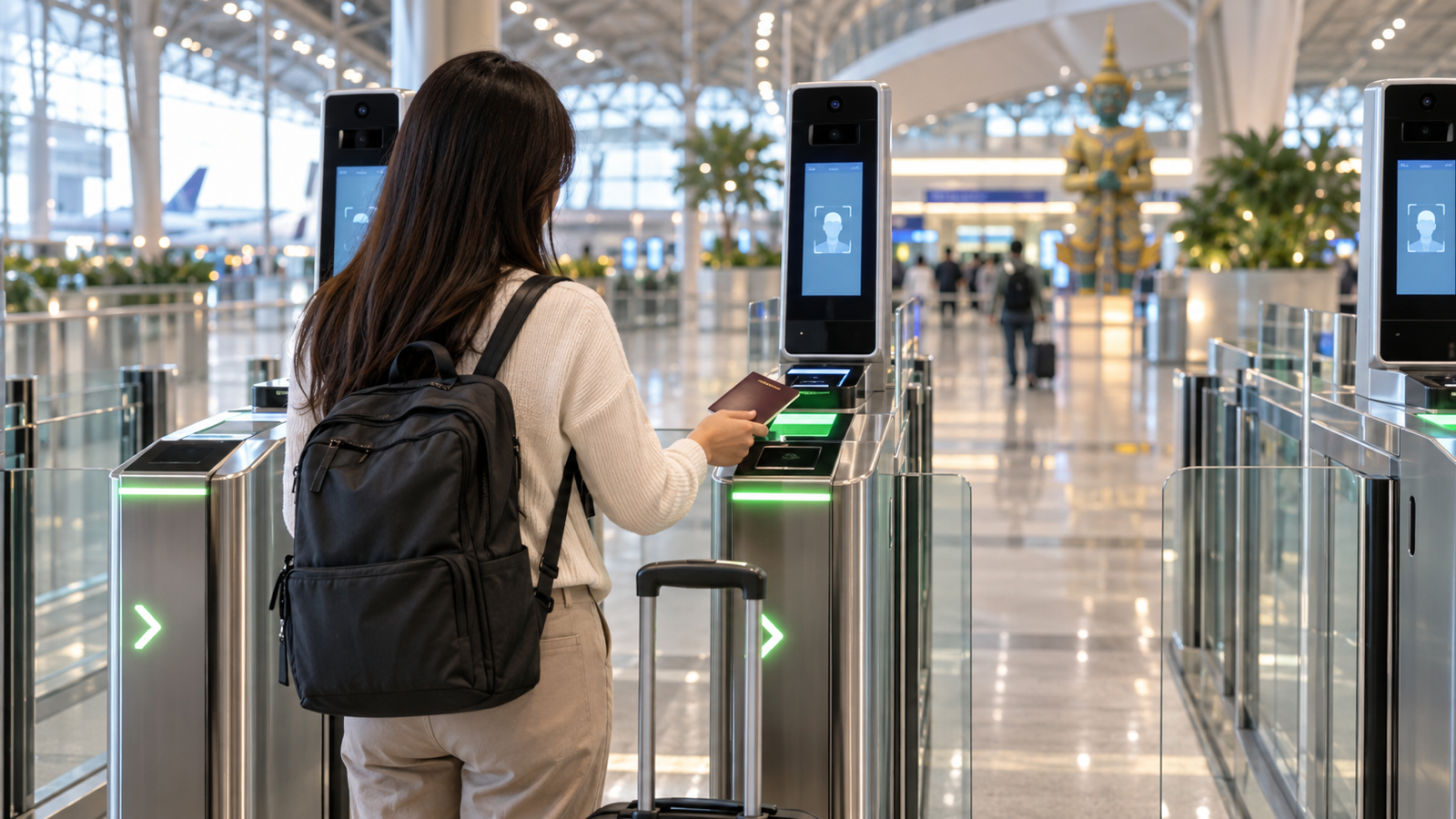
Thailand’s expanded airport e-gates are making arrivals faster for some travellers, but they also create a new entry-status trap. If you are entering with a tourist, DTV, retirement, marriage, work or another visa, use a staffed immigration counter unless an Immigration officer specifically directs you to an automated gate.
Thailand TDAC Guide
How to complete the Thailand Digital Arrival Card before you travel.
Read the TDAC guide →
Thailand Airport E-Gates Guide
Eligibility, passport conditions and the latest BKK and DMK arrival guidance.
Read the e-gates guide →
What the video says about Thailand’s arrival e-gates
In the referenced video, The Bangkok Guide’s Cal reports that Suvarnabhumi Airport’s arrival e-gates have begun accepting travellers from a wider group of countries and territories. The video says users need an eligible passport, a completed Thailand Digital Arrival Card (TDAC), a previous Thai entry recorded in the current passport and a 30-day visa-exempt arrival.
The most important warning is about the screen shown at the gate: travellers may be asked to confirm that they are entering under the 30-day visa exemption. That is not the correct route for somebody who holds a tourist visa, DTV, retirement, marriage, Non-B or other permission that must be recorded at entry.
Why visa holders should use the staffed counter
Thailand’s immigration and visa systems are related but separate. A visa allows a traveller to seek entry for the purpose and period covered by that visa; it does not replace the Immigration officer’s examination at the border. At a staffed counter, the officer can check the visa, re-entry permission and the permitted stay that should be recorded.
For that reason, the practical advice during this phased rollout is simple: if you are not entering visa-free, do not select a visa-exempt option merely because the gate is available. Go to the staffed counter and present the passport and documents for the status you intend to use.
What has been verified so far
Thailand announced in August that Suvarnabhumi’s automated border-control programme would be expanded to additional nationalities. Bernama reported that the Immigration Bureau had agreed in principle to add 31 nationalities, potentially taking the total to 33 foreign passport groups. The rollout was expected to depend on equipment, security systems and biometric-data readiness.
Current official material is not perfectly aligned with the latest traveller reports. The airport’s published arrival guide still specifically names Thai, Singaporean and Hong Kong passengers for automatic border control, while its general automatic-channel page describes e-passport requirements. This means the live signs and instructions at the airport remain decisive. Eligibility lists online should not be treated as a guarantee that every lane is operating for every passport or visa category.
Thailand’s current visa-exemption framework also matters: from 15 September 2026, the revised scheme provides up to 30 days for eligible nationalities entering for tourism. That rule is separate from the e-gate itself. A traveller must still meet the applicable visa or visa-exemption conditions and complete the official TDAC.
Before you fly to Thailand
- Check whether you are entering under visa exemption, a visa, a re-entry permit or another permission.
- Complete the TDAC only through the official Thai Immigration website and make sure the details match your passport.
- Bring evidence relevant to your status, such as your visa approval, re-entry permission, onward travel and accommodation details.
- At Suvarnabhumi, follow the current signs and staff instructions. If the gate asks you to confirm a status that is not yours, stop and use the staffed counter.
- After clearance, check the admitted-until date and entry status before leaving the arrivals area. Fixing an incorrect record immediately is safer than discovering it weeks later.
Do not confuse arrival and departure e-gates
Thailand’s automated departure process is broader than the reported foreign-arrival rollout. An official Immigration notice says biometric e-passport holders of all nationalities may use the automatic channel to leave Thailand at international departure passport control at Suvarnabhumi. That does not mean the same traveller can use an arrival e-gate, or that departure automation changes the visa or permitted-stay record from the previous entry.
For the broader list of reported arrival conditions and the distinction between BKK and DMK, see our existing Bangkok airport e-gates guide. For the TDAC requirement, use the Thailand Digital Arrival Card guide.
Watch the source video
Video source: The Bangkok Guide, “Arriving in Thailand? New E-Gate Warnings, Entry Denials & Heavy Rain Alert”, published on YouTube. The transcript used for this report was auto-generated by YouTube and was checked against the sources linked above. Video commentary and traveller reports are not a substitute for instructions from Thai Immigration at the airport.
Last reviewed 14 October 2026. Airport procedures can change during a phased rollout; follow the latest instruction from Thai Immigration at the checkpoint.
Need help with a Thai visa or entry record?
Next Step Hua Hin can help you understand visa conditions, re-entry permits and permitted-stay records. Visit our Thailand visa guides or contact the Hua Hin team.
Ask Next Step Hua Hin
Type your question below to search our website and receive an immediate answer.