
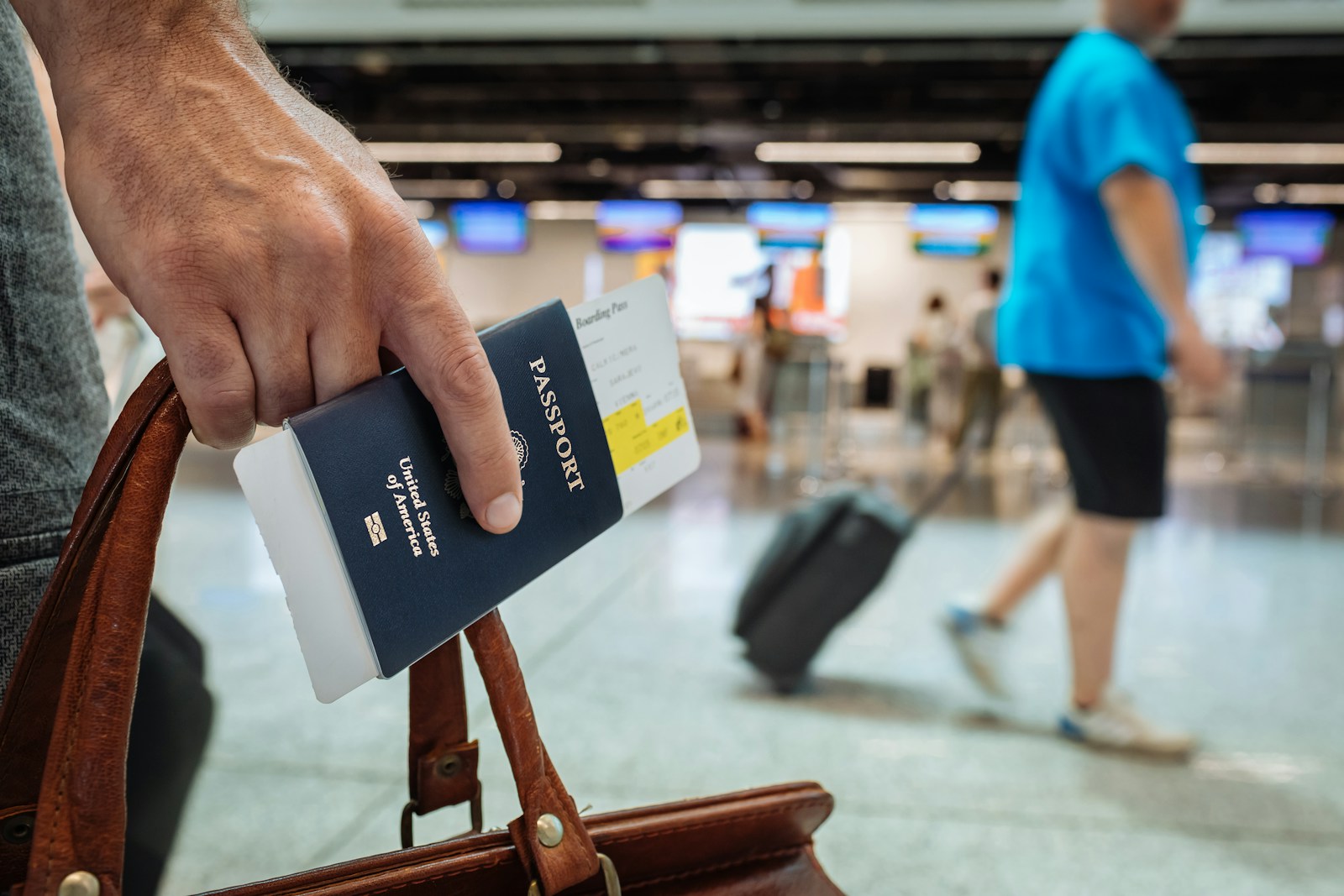
Do you have to carry your original passport every time you leave your home in Thailand? A recent travel article lists Thailand among countries where visitors may be expected to carry passports. But its headline example of a 100,000-yen fine is about Japan, and it does not identify a Thai law setting that penalty for not carrying a passport.
Here is what the available Thai legal text and official travel advice say.
Does Thai law require foreigners to carry the original passport at all times?
Thailand’s Immigration Act, B.E. 2522 (1979), does not appear to impose a general rule that every foreign visitor must carry the original passport at all times. Section 37 sets out obligations for foreigners granted temporary entry, including certain residence notifications and 90-day reporting. It does not list carrying a passport as one of those duties.
Section 76 sets penalties for failing to comply with specified duties under Section 37(2)–(5). That is not a passport-carrying fine. Do not confuse penalties for reporting obligations with a penalty for leaving your passport securely at home.
Can police ask to see your passport?
Yes. The UK Foreign, Commonwealth & Development Office says police may ask to check your passport. If you do not have it with you, you could be asked to produce it at a police station within 24 hours. It says a copy of the passport photo page will usually be sufficient.
Local immigration guidance is more cautious. The Samut Prakan Immigration FAQ advises foreigners to carry either the passport or a photocopy showing the photo page and latest extension of stay. It mentions possible detention and a fine of up to 2,000 baht, but does not cite a specific passport-carrying provision in the Immigration Act. Treat this as local official guidance, not proof that the Act sets a nationwide fine specifically for not carrying the original.
The U.S. State Department advises U.S. citizens to carry a physical or digital copy of the passport identification page and current Thai visa, warning that authorities can detain them if they do not have a copy. This is U.S. travel advice; it is not itself Thai legislation.
What should visitors and expats carry?
- Keep a clear paper or secure digital copy of your passport photo page.
- Keep a copy of your latest Thai entry stamp or extension-of-stay page with it.
- If an officer asks for the original, cooperate and follow instructions about where and when to produce it.
- Take the original when you need it for immigration business, travel or another service that requires the physical document. For overnight trips, Samut Prakan Immigration recommends taking it.
- Keep the original protected from loss, theft, water and damage when you do not need it.
A copy is a practical backup, but it may not satisfy every officer or situation. Keep your original accessible and make sure you know your current permitted-stay date. For related guidance, read our Thailand border runs and visa runs update and our guide to TM30 and 90-day reporting.
The takeaway
The available sources do not establish a clear, general Thai statutory rule requiring every foreigner to carry the original passport at all times, or a specific Immigration Act fine for not doing so. However, police may request it, and immigration and foreign-government guidance recommends keeping the passport or a copy available. Carrying a copy and storing the original safely is a sensible everyday approach.
Take and keep clear photos on your phone of:
- Your passport’s photo and personal details page
- Your original visa or e-visa document (if applicable)
- Your latest arrival or extension stamp
- Your TM30 receipt
- Your latest 90-day report receipt or confirmation
Sources
- Royal Thai Police: unofficial English translation of the Immigration Act
- UK FCDO: Thailand safety and security, personal ID
- Samut Prakan Immigration FAQ
- U.S. State Department: Thailand travel advisory
- Travel + Leisure: Can You Be Fined for Not Carrying Your Passport Abroad?
This article summarizes publicly available legal texts and government travel guidance. It is general information, not individual legal advice. Local practice may vary; follow lawful instructions from Thai officials.
Last checked: 23 October 2026.
Ask Next Step Hua Hin
Type your question below to search our website and receive an immediate answer.