
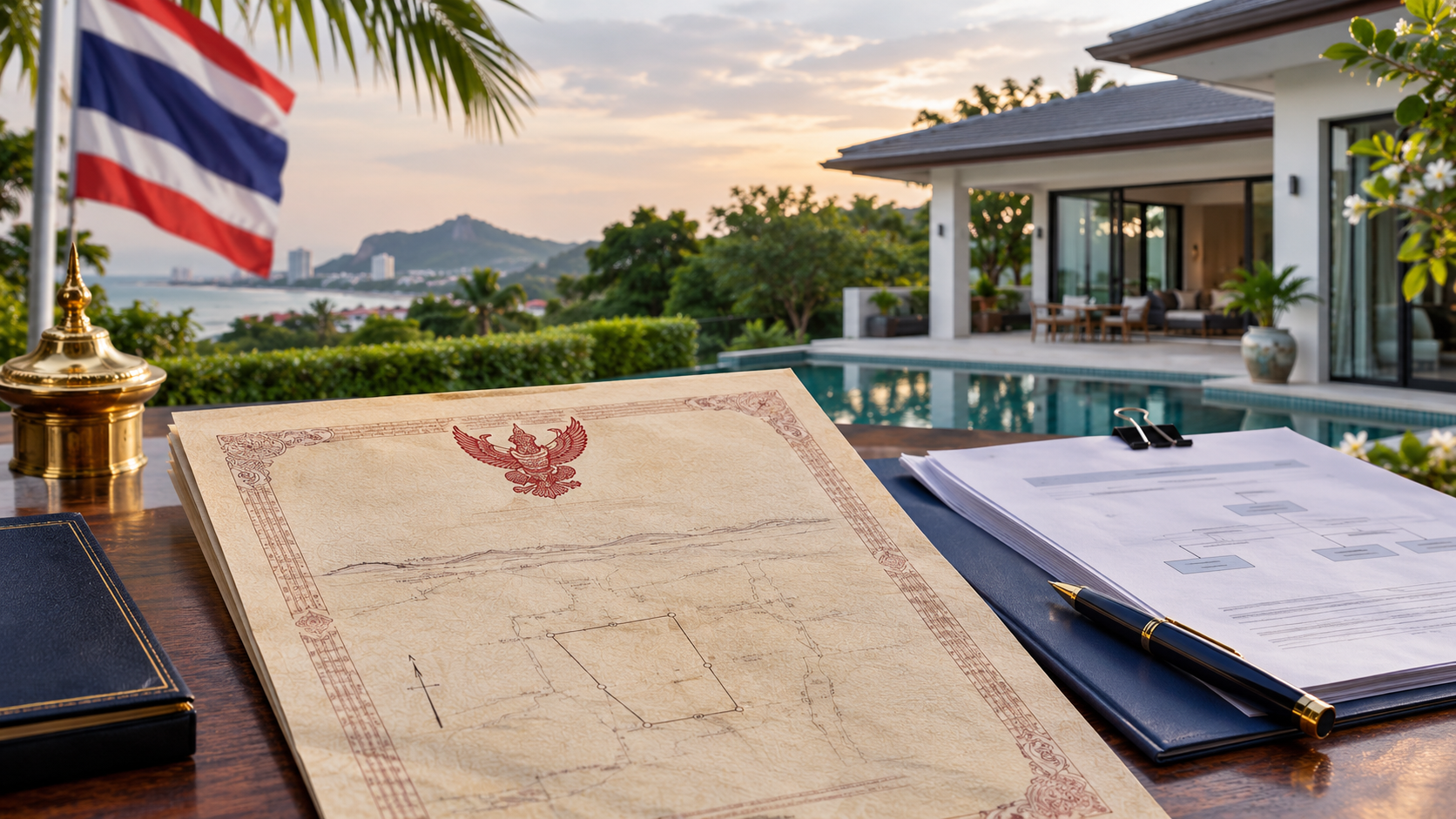
Thailand is intensifying its nationwide crackdown on illegal nominee landholding. On 19 October 2026, Prime Minister Anutin Charnvirakul launched an operation to identify the real foreign beneficiaries behind landholding companies and nominee share structures.
What the government has identified
The Department of Lands has identified 1,397 legal entities suspected of holding 2,360 plots of land for foreign nationals, with an estimated value of about THB 14.01 billion. The government has instructed the relevant agencies to complete priority investigations by December 2026.
Authorities are comparing land, company, tax, immigration and financial records. The stated focus is not simply the name on a share register or title deed, but who actually paid for, controls and benefits from the property or business.
What is a nominee arrangement?
A nominee arrangement is where a Thai person or company holds shares, land or business interests on paper for a foreigner who is the real beneficiary or controller. A 51/49 shareholding pattern is not automatically illegal, but the facts matter: Thai shareholders must have a genuine financial interest, real decision-making rights and the means to support their investment.
For a practical overview, see our guide to Thai company structures for property ownership and our property ownership rules for foreigners in Hua Hin.
What can happen?
Where authorities establish that land was acquired or held unlawfully for a foreigner, the relevant Thai laws may require disposal of the land and can expose the people involved to criminal, financial and immigration consequences. The exact consequences depend on the facts, the structure used and the legal provisions applied. Obtain independent advice from a qualified Thai lawyer before making any transfer or restructuring decision.
Do not try to “fix” a nominee structure informally
- Do not assume that selling the property or transferring the shares will make the underlying problem disappear.
- Do not simply remove the foreigner and leave the same nominee shareholders in place.
- Do not rely on a promoter of the original structure to sell you a new “solution” without independent legal and financial due diligence.
Who is affected?
This operation targets suspected illegal nominee arrangements. It does not mean that every foreign condo owner, properly licensed business or registered lease is unlawful. However, a structure should be reviewed on its own facts, especially if the Thai shareholders did not invest their own funds, do not exercise genuine control or were appointed only to satisfy a paper ownership ratio.
What should property owners do now?
- Collect the title deed, sale agreement, lease, company records, shareholder evidence and payment trail.
- Ask an independent Thai lawyer to review beneficial ownership, funding, control and compliance.
- Do not sign a transfer, share resignation or new company document under pressure.
- Keep copies of all correspondence and financial records.
This article is general information, not legal advice. The situation is developing and official investigations may clarify how individual cases are treated.
Related reading: Hua Hin’s separate review of 694 property companies and our 2026 guide to buying property in Thailand as a foreigner.
Choose Next Step Hua Hin as a preferred source
Increase the chance of seeing our Visa News in Google Top Stories.
Ask Next Step Hua Hin
Type your question below to search our website and receive an immediate answer.